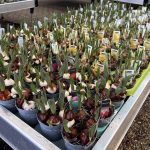
Have you considered growing your own veg? If you have, getting started is much easier than you may realise. Not only do get to see (and eat) the fruit of your labour, but it’s a great way to get stuck in and enjoy the benefits of gardening. We’ve put together a guide for how you can start a vegetable garden.
Why should you plant your own veg?
First off, let’s look at the reasons why you grow your own veg. One of the biggest reasons you should start planting your own veg is the benefits to your health and wellbeing. It can help improve your mental health, provides some exercise, and allows you to connect with nature.
One of the biggest reasons people adopt green fingers and plant their own veg is the controlled use of pesticides. Many of the fruit and veg we buy may have been exposed to a multitude of pesticides. Each year, a report is published that tests the risks of pesticides on fruit and veg.
The latest report from 2021 found that out of a sample of 3,530 fruit and veg, the following contained traces of pesticides:
- 81% contained pesticide residue at or below the maximum residue level
- 55% contained pesticide residue over the maximum residue level
While nearly 50% of the samples tested didn’t contain pesticide residue traces, many people still want much greater control over what their food is exposed to.
Starting your vegetable garden also helps you to reduce your carbon footprint. As you are growing food very close to home, it cuts out the transporting of goods from miles away. Often your produce from the supermarket originates from another country altogether!
Other reasons to consider growing your own include:
- Reducing your plastic usage and waste
- Save money in the long term
- Fresher and more nutritional
- Tastes better
- Satisfaction
- Less food waste
- It’s a great way to get the kids involved and enjoying their greens!
Starting your vegetable garden

The great thing about growing your veg is you can get set up anywhere there’s sufficient space. Whether it’s the garden or an allotment, you can get started quickly and easily. To get the best harvest, there’s more than just planting seeds in the ground though. Here’s what you can do:
Choose the right spot
While you set up a veg plot almost anywhere, some places fare better than others. The very first thing you need to do is pick the right spot for planting. Ideally, you want to find a spot that has plenty of sunshine but is shielded from the worst of the wind.
It may also be worth pointing out that some veg grows better slightly shaded. It’s always best to read the seed packet first to double-check. But most veg will grow with sufficient sunshine. You’ll also need level ground too. Don’t forget access to water as well. That’s just as important as sunlight.
Plan your plots
If you are new to creating a vegetable garden, it can be tempting to plant a variety of veg without much thought. However, it’s best to plan out your veg plot first to wrinkle out any potential problems. Ideally, you should aim to plant your veg beds in groups of 4 so it makes rotating much easier.
Get the soil right
The soil is the foundation for your vegetable garden. If you don’t get the soil right, things won’t turn out well. If you are using part of your lawn, you need to first strip the grass and sod. This can be the most difficult part of setting up your soil.
It’s usually recommended not to turn your soil as this can disrupt or destroy vital microbes and soil life. However, if you have just dug an area of your lawn, turning your soil is much more beneficial. It helps loosen up the soil much quicker than natural means.
You also want to add mulch or compost to your patch before you plant any seeds or bulbs. Whatever soil you’re working with, organic matter will go a long way to prevent soil from compacting. That’s why it’s important to add mulch.
Check out our tips and tricks for planting bulbs
Rotating your crops
Rotating your veg is vital for any pests or diseases to build up that can ruin your great crop. Crop rotation is something every veg gardener should do. It involves planting different vegetables in the same plot throughout the year.
Asides from keeping pests and diseases at bay, rotating your crops help you to better organise your crops into groups based on their cultivation needs. Other benefits of crop rotation include soil fertility and better weed control.
The important thing to remember with crop rotation is that veg needs to be planted in groups. These are:
- Brassicas, such as cabbage, sprouts, kale, turnips, swede
- Legumes, such as peas and beans
- Onions (including shallots, leeks, and garlic)
- Potato and tomato
- Root veg, such as carrots, beetroot, celery
For more guidance on how to rotate your crops, check out these tips from the Royal Horticultural Society.
Soil nutrients
It’s often said by experienced gardeners that compost is like gold when it comes to planting. Looking after your soil and ensuring there are sufficient nutrients in the ground will help your crops more than anything.
If you haven’t already started composting, it may be worth setting one up alongside your vegetable garden (providing you have the space). Compost bins can be a great way to set up a compost pile. These take up little space and don’t smell (providing balance in the moisture levels).
- Alternate between dry and moist layers in your compost
- If the compost is too moist, add dry carbon-heavy material
- Add soil and organisms (such as red worms and beetles) for decomposing
Good compost will make a balance between green material and brown material. Green materials (such as food scraps and grass clippings) are those that add moisture to a compost pile and are rich in nitrogen. Brown material (such as dead leaves) is dry and adds carbon to a compost pile.
Quality compost will have a rich smooth texture that is dark in colour. It should smell and look like soil without any scraps. If you haven’t got compost ready, consider buying some nutrient-rich compost.
Add your compost into layers where you intend to plant your veg seeds. Giving your veg plenty of nutrients really does improve the quality of your crops. It truly is like gold for your vegetable garden.
Protection
Sadly, you won’t be the only one who wants to get in on the great veg you grow. Both rodents and pests will want to get a piece of the action. That’s why it’s important to protect your crops from any unwanted guests.
One way to keep away pests, such as weevils and whitefly, is to plant several companion flowers (such as marigolds). This help attracts beneficial insects that do not harm your veg and will keep the bad pests away that will feast on your crops.
For larger rodents, consider placing netting or wire fences over your crops. After all that hard work, it can be upsetting to see a rat, squirrel, or fox making away with the fruit of your labour. While there are repellent sprays available, a physical solution such as fencing can be much more beneficial.
Start small
If you are starting, the best advice is to start small. While you may be bursting with enthusiasm to get started, you can overdo it too early. The best thing to do is start by planting 1 or 2 vegetables in a small patch.
Once you’ve tried it out and gained experience, you can discover what you can improve on. Maybe your soil wasn’t right, or you found that you planted the seeds in the wrong place. Starting small also reduces disappointment should things not turn out right.
It may also be worth considering starting with an easier vegetable first. Some veg is much easier to grow than others. Beans, potatoes, courgettes, and strawberries are great for beginners to get started.
Avoid overcrowding
Just like starting small, you want to avoid overcrowding. Poor spacing and overcrowding can lead to competition for water and minerals, which affects growth. This is one of the most common mistakes people make when starting.
Typically, a seed packet will outline how big a vegetable plant should grow. Some will grow much taller and bigger than others. Account for this when creating a layout plan for your vegetable patches.
Avoid planting everything together
One of the biggest mistakes you can make when starting is planting everyone all at once. Different varieties will have different growth times. Also, different vegetables will be ready at different times of the year. You should account for this when planting your seeds. Don’t chuck everything in all in one go!
Watering
The only other thing that remains is watering. Watering is just as important as soil nutrients and sunlight (just like any other plant). Always make sure you have a supply of water nearby so you can provide moisture when your veg needs it.
Some tips for effectively watering your veg include:
- Water to a depth of 30cm
- Avoid watering the top-level soil every day
- If no rain has fallen, consider watering once every 10 days
- Dig to a spade level to check the moisture level of the soil
- Watering unnecessarily only causes the vegetable plant to grow, not the edible part!
- Ensure you keep your veg garden free from weeds
It may be worth setting up a Water Butt to collect rainwater. Using a Water Butt is an efficient way to save water by reusing collected rainwater. It is perfectly harmless for your plants too. Consider connecting a Water Butt to a guttering downpipe.
Planting calendar
Different vegetables require planting at different times of the year as they come into season. To help you know the right time of year for planting, here’s a planting calendar you can use.
The only thing that’s left is to harvest your fruit, veg, and herbs once they are ripe. Finding the right time to pick your veg is important for ensuring quality. Once you’ve picked ‘em, all that’s left is to enjoy ‘em. Happy planting!